
Overstriding and braking: reading an old-way/new-way comparison
12 October 2026 | Category: Running Technique Advice
Side-by-side stills make a technique change easy to see. Here’s what to look for in an old-way/new-way comparison, and what a still image can’t tell you.

In September 2026 we shared a coaching example with Brianna Throssell. Afterwards, we pulled two still frames from her footage and annotated the changes we saw in her landing and braking.
What to look for
- A more vertical shin at landing in the new pattern.
- A landing position closer to her centre of mass.
- A smaller angle at landing, which we associate with less braking.
- A more vertical femur (thigh) as the foot lands.
These are observations from one athlete’s comparison. They’re not positions you should force yourself into.
Movement first, landing as an outcome
We never told Brianna where to put her foot. We changed the movement pattern, and the landing changed as a result. That’s at the heart of how we coach: find the movement that creates the outcome, rather than chasing the outcome itself.
What a still image can’t tell you
A single frame shows alignment. On its own, it can’t measure force, running economy or future injury risk. The reduced braking we describe comes from what we saw in the footage, not from force-plate measurements.
For more background, read Running vs walking mechanics or explore the Core Program of Cues.
Articles & tips
Learn more about running technique
Movement to Metrics: Unlock Better Running with Stryd
How your running form shapes your Stryd Footpath and metrics: Paul Mackinnon’s top-down approach, with case studies from Brady Holmer. First published…
What happens in a running-technique assessment?
Watch a real self-awareness session and see the questions we ask, what they reveal and what comes next in a running-technique assessment.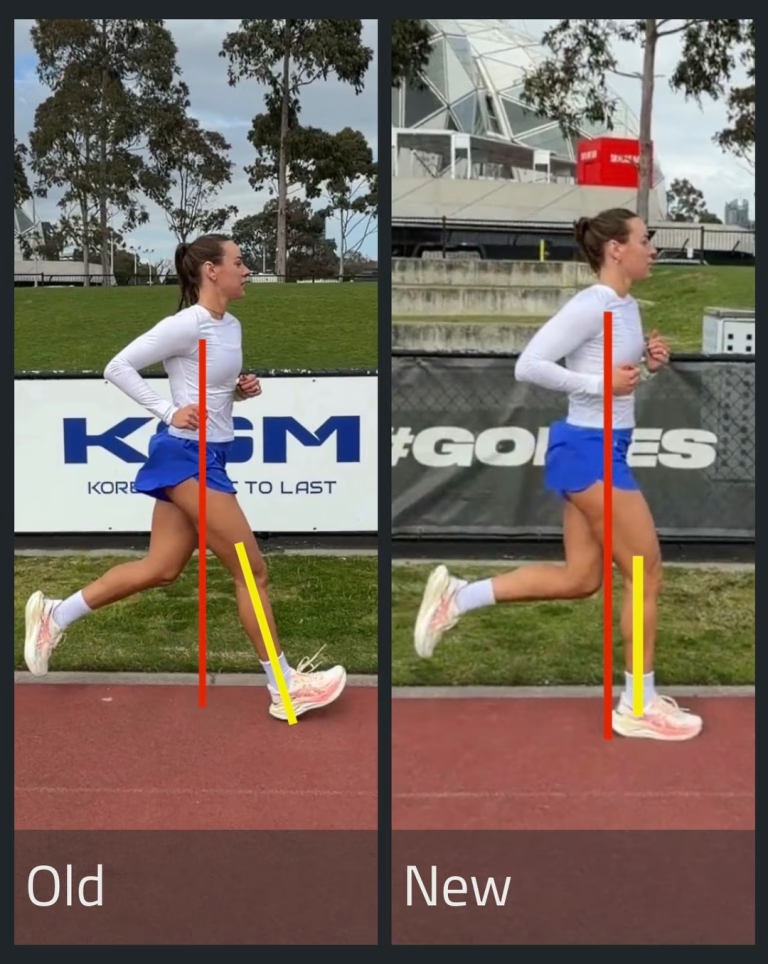
Overstriding and braking: reading an old-way/new-way comparison
How to read an old-way/new-way comparison: the landing changes we look for, why we coach the movement rather than the foot, and…
Returning to running with a new movement pattern: Brianna Throssell
How technique work fitted alongside clinical guidance and a gradual mileage rebuild in Brianna Throssell’s return to running.
Changing running technique in-season: George Wardlaw
What it takes to change running technique mid-season, from our work with AFL player George Wardlaw.
How upper-body changes can influence your running stride
Why we look above the hips when working on knee drive, foot recovery and symmetry, from a coaching session with Cortney.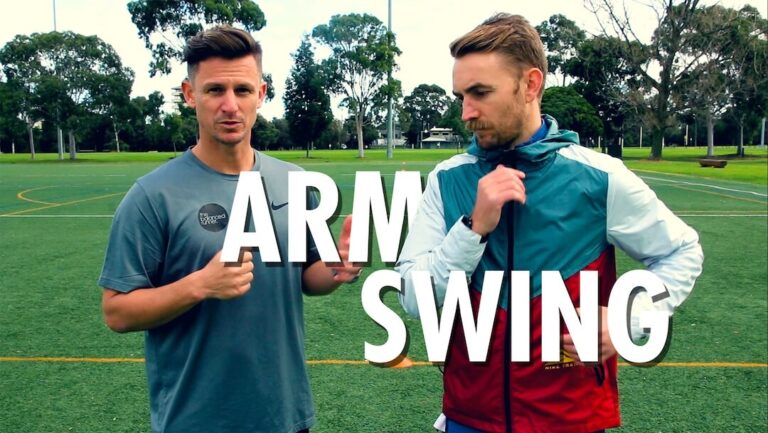
Running arm swing: why your upper arms matter
Why the upper arm matters in running, and how arm movement fits into our approach to technique.
Paul joins The Aerobic Edge: cadence, foot strike and what matters
Paul and Joost Dekker explore why cadence and foot strike are outcomes of movement, and how the arms and torso influence running…
Paul on The Endurance Lab: running faster with less effort
Paul joins Jusman So to discuss running economy, arm swing and the movement cues that can change how running feels.
Paul talks running technique on the Sweat Elite Podcast
Paul’s June 2026 conversation with Matt Fox explores changing running form, practising cues and making new movement patterns habitual.
Paul joins Stronger Stride to talk running technique
In episode 255, Paul discusses the physics of running, body awareness and the movement patterns behind common technique errors.
Paul discusses gait re-education on RunningLifestyleCulture
Paul’s RunningLifestyleCulture appearance explores gait re-education and learning running skills after years of running.
Paul joins The Physical Performance Show
Episode 374 explores Paul’s top-down approach, movement awareness and the difference between coaching inputs and chasing outcomes.
Paul joins The Kaizen Show with Coach Macka
Paul joins Coach Macka for a conversation about running biomechanics, physics, cadence and super shoes.
Improving your Stryd footpath with running technique
Paul Mackinnon’s feature for the Stryd blog: how working on the upper body changed one runner’s Stryd Footpath, and how to use…
Paul talks running biomechanics on All Things Running
Paul and Jacob Rees Montgomery discuss biomechanics for recreational and professional runners, from arm swing to the influence of super shoes.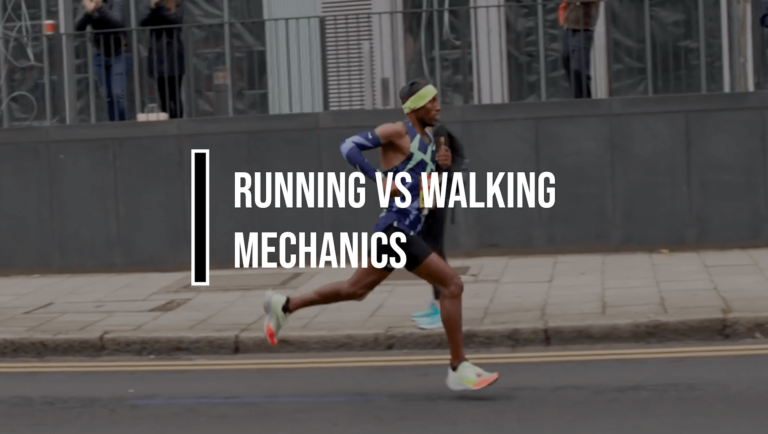
One of the foundations of Running Technique explained – Running vs Walking Mechanic
Paul breaks down the common mechanics in both walking and running, and how using the proper running mechanic can make you more…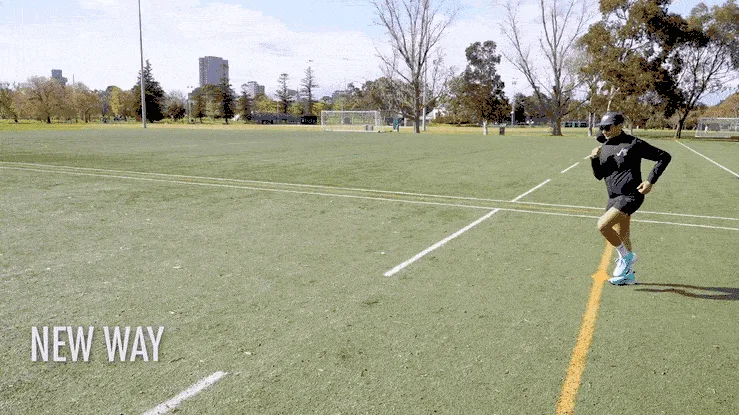
Is There An Ideal Cadence When Running?
Cadence in running is so poorly used and in most cases poorly understood.For those wondering, cadence is the number of steps taken…
Paul joins Get Fast Podcast: mastering running form
Paul joins Gerard and Jordy Donnelly for practical discussion of arm movement, cadence and changing running technique.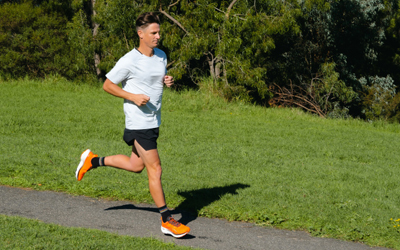
Broadsheet Feature Article: The Science To Help You Become a Better Runner
Our Broadsheet feature with PUMA on the science of better running, and why anyone can improve with the right movements.
The Ultimate Running Form Episode with the Strength Running Podcast
Paul Mackinnon joins Jason Fitzgerald on the Strength Running Podcast for a deep dive into running form, cues and cadence.
Running Technique learnings from Galen Rupp
I have been lucky enough to work with Galen Rupp a few times over the past year as he looked to get…
Congratulations Brett Robinson – Australian Marathon Record (2022)
I’ve been working with Brett Robinson for a little while now and a few weeks ago in the lead up to the…
Jakob & Henrik Ingebrigtsen Form Comparison
This is just a very short breakdown of the form of the Ingebrigtsen brothers while they jog together.
Paul joins For The Kudos Podcast for a Technique Q&A
Paul has been working with both Brett and Joel over the past couple of years to improve their technique and their performance,…
Running Technique Coaching vs Strength & Conditioning
If you have followed Paul for a while, you will know that he likes to have a bit of fun at the…
Paul joins Bodies Built Better: running efficiently
Paul joins Jackie Tann to discuss efficient running, self-awareness and the movement patterns he looks for in technique coaching.
An example of Stride & Cadence with Paul Chelimo and Luis Orta
I saw this video recently and thought it was a great opportunity to highlight the difference movement can make to running at…
Timing of your movement when running
The timing of your movement is critical when running. This article outlines how to think about this and the affect it can…
How do you hold your shoulders when running?
How do you hold your shoulders when you are running? In this summary, we outline the common issues with tension in shoulders…
How Do You Identify Your Running Technique?
A lot of people don't take the time to be fully aware of what their body is doing while they are running.…
Paul on Relaxed Running: technique and running efficiency
Paul joins Relaxed Running to discuss technique, injury prevention and running efficiency, drawing on his background in hockey and coaching.Free newsletter
Get running tips in your inbox
Technique cues, new articles and program news from Paul Mackinnon, sent straight to you.